

Introduction: When Scans Create More Pain Than They Solve
(Intro paragraph should hook using “MRI for back pain” and “MRI for neck pain” within first 100 words for SEO. Consider adding a link to MovementFirst.org/neck-pain-course)
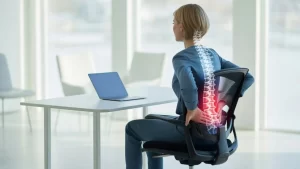
Someone in your circle has neck or back pain right now. You’ll hear about it soon enough — how they can’t bend over, sneeze, or drive without wincing. Then comes the line that changes everything:
“My MRI confirmed how bad it is.”
Disc bulge this, degeneration that. It sounds serious, even terminal. But as a physiotherapist, I know what’s coming next — the “dose of reality” speech. So before we talk truth, let’s step back and look at how MRI became the holy grail of back and neck pain… and why that faith might be misplaced.
A Short History of Spinal Scans
In 1971, Godfrey Hounsfield invented the CT scan — basically a stack of X-rays with a computer doing the maths. Quick, clever, but loaded with radiation (about a 24% increased lifetime cancer risk).
Then in 1977, Paul Lauterbur and Raymond Damadian gave us the MRI — no radiation, beautifully detailed images, and a soundtrack that sounds like a techno remix of a broken printer.
CT: cheaper, faster, radiation.
MRI: pricier, safer, slower.
Both give us impressive pictures, but neither can tell us why your back actually hurts. Most of the time, those “abnormalities” are simply… normal ageing.
(Insert internal link suggestion: What MRI Really Shows About Neck Pain)
The Economics Nobody Talks About
Spine imaging is a goldmine. In the U.S., spending on neck and back pain tops $134 billion a year (Dieleman et al., 2020). Australia’s Medicare imaging spending? Up over 50% in a decade. In the UK, MRI use for spine pain has tripled since the 1990s.
Radiologists are well-paid (average US salary: $490,000/year, Medscape 2023), and large imaging chains like RadNet, GE Health, and Integral Diagnostics have turned scans into a volume business.
The result? You get an MRI you probably don’t need — a scan that confirms your spine has… aged, like the rest of you.
(SEO note: mention “MRI for back pain cost” in this section.)
“Congratulations! You’ve won… a scan you didn’t need, anxiety you didn’t deserve, and a treatment plan that costs more than your car. Sponsored by Big MRI™.”
Scans vs. Reality
Here’s what the evidence says: only 1–5% of spinal pain comes from serious medical issues (tumours, fractures, infections). Yet 25–42% of patients still get imaged (El-Tallawy et al., 2021).
Common red herrings found on scans:
- Disc degeneration– nearly universal over age 50
- Disc bulges– common and often shrink naturally
- Facet joint arthritis– often painless
- Annular fissures– frequently irrelevant
- Disc height loss– normal ageing
- Spondylolisthesis, Modic changes– can be asymptomatic
Brinjikji et al. (2015) found disc bulges in up to 96% of pain-free people.
If MRI reports were honest, they’d read:
“Congratulations, you’re ageing normally. Go for a walk.”
(Internal link suggestion: Understanding Back Pain Without Scans)
Neck Scans: A Comedy of Errors
Matsumoto et al. (2010) showed how weak the link is between MRI findings and neck symptoms. Most disc bulges don’t cause pain — half shrink within six months, and 75% within two years.
Even spinal cord compression isn’t necessarily bad news. Smith et al. (2021) found 24% of people had it with no symptoms, while only 2.3% had true progressive myelopathy.
If you looked at the scan alone, you’d think your neck was about to explode. Reality check: it’s fine, you’re fine.
The Corporate Pipeline of Pain
Here’s how the system feeds itself:
- You get a scan.
- It finds something “scary.”
- You stop moving and panic.
- You’re referred for injections or surgery.
- When that fails, you’re told to “get another scan.”
This is vertical integration at its finest — imaging companies feeding surgeons, feeding device manufacturers and pharmaceutical firms. The system profits. You pay in fear, money, and lost quality of life.
(Internal link suggestion: Why Movement Is the Real Medicine for Back Pain)
What You Should Actually Do
Scans are valuable only when red flags are present — not when your back hurts after gardening.
A scan that doesn’t change management is just an expensive anxiety bomb.
If it won’t alter your treatment plan, it’s not worth doing.
“Your disc might look ugly, but that doesn’t mean it’s guilty.”
Instead, get moving. Rebuild confidence in your body. And use evidence-based tools to identify when imaging is actually needed.
(CTA suggestion: Link to free “SpinalRisk Red Flag Tool” on MovementFirst.org)
The Wrap-Up
Let’s recap:
- Most spinal pain isn’t serious.
- Most MRIs are unnecessary.
- Imaging overuse fuels anxiety and overspending.
- The corporatisation of scanning has turned back pain into a billion-dollar business.
If you truly need a scan, your symptoms will show it. If not, save your money — and your sanity.
Your spine doesn’t need another scan.
It needs smarter movement, and a healthcare system that’s not run like a casino.
(End with internal link CTA: Explore Movement First Courses)
References
- Dieleman JL et al. (2020). US Health Care Spending by Payer and Health Condition, 1996–2016. JAMA.
- El-Tallawy SN et al. (2021). Low Back Pain Epidemiology and Imaging. Frontiers in Public Health.
- Brinjikji W et al. (2015). Systematic Literature Review of Imaging Features of Spinal Degeneration in Asymptomatic Populations. AJNR.
- Matsumoto M et al. (2010). MRI of Cervical Spine in Asymptomatic Subjects. Spine (Phila Pa 1976).
- Smith SS et al. (2021). Cervical Cord Compression in Asymptomatic Adults. Spine Journal.
- Medscape Radiologist Compensation Report (2023).
Dieleman JL, et al. (2020). JAMA Health Forum.