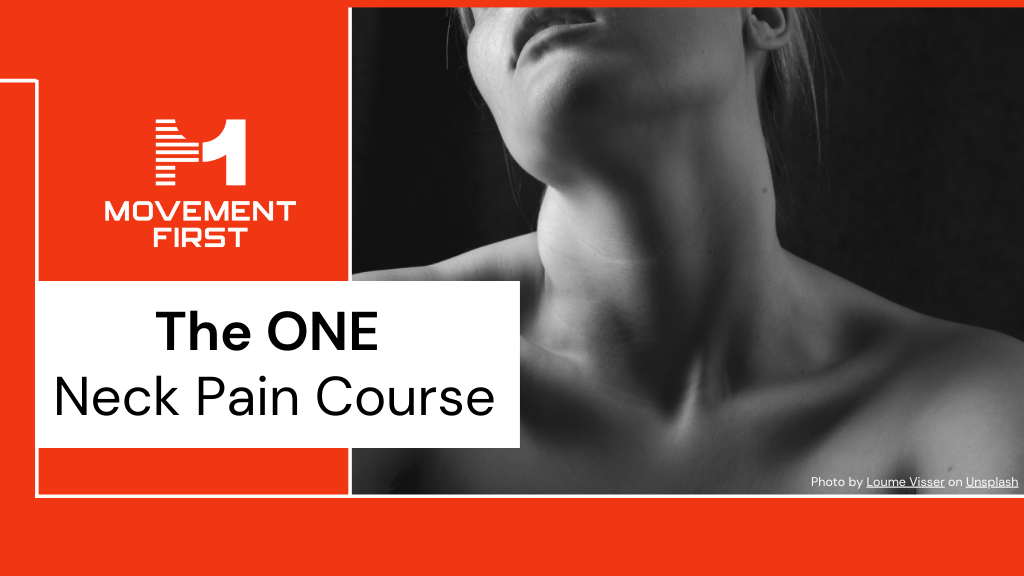


Neck pain relief – you want it. I get it.
The Internet’s Neck Pain Circus
If you’ve ever typed “neck pain stretch” into YouTube and found yourself surrounded by people contorting like Cirque du Soleil hopefuls, you’re not alone. The comments below are a mixed bag ranging from “complete genius” to “I am in agony” and we should not be surprised.
So here I am, Stuart Cox, Physiotherapist and founder of Movement First, and I’ve spent decades helping people recover from neck pain without the misinformation, gadgets, or super moves of false promise.
Before we dive in, one truth: There’s no miracle stretch or perfect posture that fixes all neck pain.
But there is a science and evidence-supported path that leads to lasting relief — and this guide will show you exactly what it is.
1. Know What Kind of Neck Pain You Have
Understanding the type of neck pain you have changes everything. It gives you an understanding of what you’re dealing with.
Acute Neck Pain (Short-Term)
Pain that’s new or sharp, usually under two months old. It might follow poor sleep, lifting, or even just a stressful event.
Chronic Neck Pain (Persistent)
Pain that lingers for over three months, fluctuates in intensity, and often has emotional or stress-related components.
Non-Specific (or mechanical) Neck Pain
Most cases of neck pain are this. No fracture, infection, or nerve root problem — just irritated structures of the spine and heightened sensitivity.
Neurological Neck Pain
More common than you think. When there’s burning, tingling, or shooting pain down the arm, possibly with sensation changes or muscle weakness. Indicating nerve involvement, but still most often manageable without injections, heavy medications or surgery.
For a free check of serious spinal pain symptoms and signs: Use my Free SpinalRisk Tool by clicking on the link on the right.
2. Stress, Sleep & the Brain–Body Connection
This is the part that many clinicians fail to embrace and explain properly to not only neck pain patients, but people with any musculoskeletal injury. Pain doesn’t just come from the neck (or any other site of injury for that matter) — it’s also shaped by other factors. Two of the most infleuential are stress and sleep patterns.
When you’re anxious or sleep-deprived, your brain amplifies pain signals — even if the tissues themselves are fine. Clinically, I use these common tools to help people take stock of these contributions and so they can measure them at certain intervals of rehabilitation.
Try These Tools:
- Perceived Stress Scale (PSS) → Click here to try it online
- Pittsburgh Sleep Quality Index (PSQI)→ download it here
- Learn about CBT strategies here with the Australian Psychological Society
Acknowledgment of these factors and small improvements here often reduce pain sensitivity dramatically.
3. Don’t Let Scans Scare You
Most scans done on spines are not required and often deemed inappropriate (Marion-Moffett et al, 2022). In fact, MRI or CT scan findings are not a major concern — even in pain-free people.
Disc bulges, “degeneration,” and “wear and tear” are the spinal equivalent of wrinkles. They show age, not damage (Carragee et al, 2006) and are responsible for people receiving diagnoses that are most often false positives (Wnuk et al, 2018).
So before you panic, remember — your pain doesn’t equal damage.
4. Exercise — The Right Way, Not the Random Way
Exercise works — but only when it’s progressive, targeted, and consistent.
Copying random internet routines is like playing neck-pain roulette.
Start Smart:
- Assess your neck’s control and range.
- Build endurance before load.
- Match exercises to your actual demands (office vs. sport).
👉 Learn how inside the Fixing Neck Pain Course
6. Your Roadmap to Lasting Relief
| Step | Action | Resource |
| 1 | Rule out serious issues | Red Flag Checker |
| 2 | Reduce stress & improve sleep | Pain CBT Course |
| 3 | Understand scans | Injection Room Documentary |
| 4 | Move gradually | Neck Pain Course |
| 5 | Stay consistent | Book an Online Consult |
Final Thoughts
There’s no miracle stretch or “perfect posture.”
There’s only understanding your body, moving smart, and building resilience.
That’s the Movement First philosophy:
Fix the way you move, not just the way you sit.
Take care of your neck — it’s the only one you’ve got.